Schoolgirl

I reviewed Osamu Dazai’s Schoolgirl for Words Without Borders.

Written in 1939 but only now translated into English for the first time, Osamu Dazai’s Schoolgirl—a slim, precocious novella narrated by a schoolgirl of indeterminate age—was stylish and provocative in its time. Almost three-quarters of a century later, its prescience seems eerie; hardly anything about this book seems to have aged, least of all the narrator herself, who is perfectly preserved somewhere along the road to adolescence. Though she’s still young enough to entertain herself with nonsensical songs and inventive daydreams as she walks home from school (“I thought today I will try to pretend that I am from somewhere else, someone who has never been to this country town before”), she’s old enough to know her childhood is fast coming to a close. “It made me miserable that I was rapidly becoming an adult and that I was unable to do anything about it,” she reflects.

The full review is here.   It’s also definitely worth spending some time with the rest of this month’s Words Without Borders issue (which happens to be all about sex).

Inscrutable India

As promised, more reflections on this year’s eventful Jaipur Literature Festival:

Up until the day before JLF began, there were rumors that Rushdie — who reportedly had been dropped from the official program due to “a very real threat of violence at the venue” — planned to make a surprise appearance. Then, on the first day of the festival, Rushdie issued a statement: “I have now been informed by intelligence sources in Maharashtra and Rajasthan that paid assassins from the Mumbai underworld may be on their way to Jaipur to ‘eliminate’ me,” he wrote. “While I have some doubts about the accuracy of this intelligence, it would be irresponsible of me to come to the Festival in such circumstances.”

To voice their disapproval of the circumstances of Rushdie’s absence, four writers, Hari Kunzru, Amitava Kumar, Jeet Thayil, and Ruchir Joshi, read from The Satanic Verses — a book that has been banned in India — in their sessions later that day. They were subsequently advised to leave the festival, and the local police opened an investigation into their activities. There were still four days of panels left.

What was left to discuss? Anything but Rushdie. On guidance from the event organizers, everyone from Shashi Tharoor to David Remnick was talking around the debacle, momentarily alluding to it — knowingly, coyly — but never quite addressing it or the full array of issues it raised on India’s thorny history with censorship, religious fundamentalism, democratic and bureaucratic processes (and Salman Rushdie himself). It was a strange predicament for a symposium of ideas to find itself in. “So many awkward Rushdie references,” I scribbled in my notebook after day three. That’s all they were, though — fleeting references, fleetingly observed.

The show must go on! the organizers seemed to be saying. And, with 200-some authors still lined up to speak, it did. Lively on-stage conversations abounded. High-profile ones did too. Amy Chua debated economic policy. Teju Cole riffed on why it wasn’t necessarily only African writers who inspired him to become a writer. Oprah advocated for women’s rights. Fatima Bhutto discussed the future of Pakistan. Akash Kapur meditated on India’s changing rural landscape. Yet the topic of Rushdie continued to remain largely untouched, and a nagging question lingered in my mind: What kind of real intellectual discussion could go on in a setting that had proved itself so hospitable to self-censorship? When you gathered a hundred-thousand writers and book-lovers and then stripped away the opportunity for a truly free public exchange of ideas, what was left?

Head over to The Millions to read my full essay,  “Inscrutable India: Jaipur Literature Festival’s Baffling Bazaar of Culture and Commotion.”

photo by me: creepy art on display at Diggi Palace during JLF

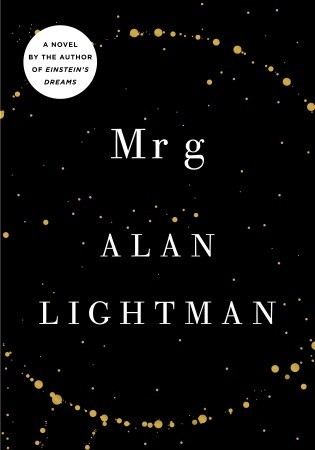
Mr. g

I reviewed Mr. g by Alan Lightman for Newsweek/The Daily Beast:

For a book with no hidden plot twists—the reader knows that Mr. g’s experiments in cosmos-building in his pet universe, Aalam-104729, are bound to lead to the birth of mankind—Mr. g is strangely suspenseful. It turns out that the act of creation is profoundly transformative, even for a formless, timeless, all-powerful primogenitor. The plot moves forward as the universe gradually unfolds, but the real story here is about Mr. g’s inner awakening.

Books of 2011: A Round-Up

Last year, I found it extremely satisfying to put together a list of the ten best new books of 2010 I’d read.  So I decided to do it all over again.  Presenting the ten best new books of 2011 I’ve read:

The Beautiful and The Damned: A Portrait of the New India (Siddhartha Deb) A few months ago, I went to see Deb and Aatish Taseer discuss the future of India and Pakistan at a Granta magazine event at 192 Books.  It was the most heated (and completely riveting) debate I’ve ever heard on the subject; Taseer and Deb are both very passionate about the subcontinent but think about it very differently.  This book illustrates Deb’s perspective through a compilation of profiles — of Indian call center employees, middle-class engineers, shady magnates, struggling waitresses, Marxist farmers, idealistic inventors, and others.  Deb doesn’t always find clear answers to the very good questions he asks about who the real winners and losers are in India’s recent economic surge.  Nevertheless, his investigations provide a rich picture of what life in today’s global India is like for the filthy rich and the hopelessly destitute, as well as those who fall somewhere in between.

Noon (Aatish Taseer) Although I followed news of the death of Salmaan Tasseer (governor of Pakistan’s Punjab province) rather closely last year, I didn’t know who Aatish Taseer was til I came across an editorial he wrote in the Wall Street Journal entitled “Why My Father Hated India.”  After seeing Taseer at 192 Books, I picked up Noon mostly because I was curious to find out more about his life and perspective.  I wasn’t disappointed.  Like its author, the novel’s main character (Rehan Tabassam) is the son of a Pakistani powerbroker and a cultured Indian mother who have a brief affair; he has a privileged upbringing but no real relationship with his father til early adulthood, when he travels to Pakistan seeking out his extended family. The novel’s biggest strength — and weakness — is that it sticks closely to what the narrator perceives and experiences. This means the big political and cultural questions the story touches on are only ever examined fleetingly, as Rehan struggles to sort out his own place as a man, a son, an Indian and a Pakistani.  Though the book seems to fall short of its own ambitions, it still offers a valuable glimpse into two dynamic countries in transition.

Guadalajara (Quim Monzó) Entrancing, fun, and unique. Months after reading this book, I find myself still thinking about the swiftly-drawn characters of these stories and their strange predicaments.

Please Look After Mom (Kyung-sook Shin) I fell for this book immediately when I read it. I fell for this book a second time when I read the responses it evoked from other readers as a judge for the Korean Cultural Service’s essay contest earlier this year. I fell for this book for a third time after discussing it with my mom when her book club read it last month.

Lee Krasner: A Biography (Gail Levin) The Brooklyn-born daughter of Jewish immigrants from Russia, by the time Lena Krasner was thirteen, she knew she wanted to be a painter. An early abstract impressionist, Krasner was already peers with artists like Arshile Gorky, Willem de Kooning, and Piet Mondrian, when she met and married Jackson Pollock. As Pollock’s career took off, Krasner directed her considerable energy and talents towards promoting his work and trying to keep his destructive alcoholism in check—while dealing with the frustration of suddenly being known simply as “Mrs. Jackson Pollack” (later critics would acknowledge that the marriage was “at once the greatest single advantage and the greatest handicap to her career”). No portrait of Pollock—or the abstract expressionist movement at large—is complete without a picture of Krasner’s life, but her life story is also very much a story about feminism’s early battles, a struggle best summed up by a few lines of French poet Arthur Rimbaud painted on her wall: “To whom shall I hire myself out? What beast must one adore? … What lie must I maintain?”

The Destiny of the Republic: A Tale of Medicine, Madness, and the Murder of a President (Candice Millard) Candice Millard brings a relatively obscure chapter of history to life in this nonfictional account of the assassination of President James Garfield.  History textbooks don’t have much to say about President Garfield because his time in office was so short, but there’s a lot to admire in his life story, from his stint as his school’s janitor to his abolitionist views and composure through terrible pain on his deathbed. A bit of trivia in the book that especially captured my imagination has to do with Chester Arthur, the man waiting in the wings.  A product of the spoils system, Arthur’s political ascendancy was entirely the result of ass-kissing, and popular sentiment widely regarded him as unworthy of the presidency. Arthur knew this about himself, and as the much-loved President Garfield lay dying in the White House, his vice-president fell into a deep despair.  Then, at his lowest moment, Arthur got a letter from an unmarried 32-year-old invalid named Julia Sand. “Great emergencies awaken generous traits which have lain dormant half a life,” she wrote.  “If there is a spark of true nobility in you, now is the occasion to let it shine.  Faith in your better nature forces me to write to you — but not to beg you to resign.  Do what is more difficult & more brave.  Reform!” Arthur was moved by this vote of confidence, and took her advice to heart.  Millard cites Alexancer McClure for this summary of Arthur’s time in office: “No man ever entered the Presidency so profoundly and widely distrusted as Chester Alan Arthur, and no one ever retired … more generally respected, alike by political friend and foe.”

The Valley of the Masks (Tarun J. Tejpal) In this haunting, mesmerizing book, Tarun Tejpal creates an entire mini-civilization hidden away somewhere on the Indian subcontinent; the novel is narrated by one of its former inhabitants recounting his life story.  I was particularly taken by the way the book enters into a dialogue with The Mahabharata — the protagonist, tellingly, is given the name “Karna” by his mother — as it considers twisting questions of ethics, morality and how to live.  In some ways, the book’s message against the evils of totalitarianism and the fundamentalist thinking (“quest for perfection”) is a simple, familiar one.  But the combination of discipline and credulity of the book’s narrator, as well as the poetic richness of the elaborate world he inhabits take this book to another plane.

The Sly Company of People Who Care (Rahul Bhattacharya) A rambling, vibrant account of the year a young cricket journalist from Mumbai spends looking for adventure in Guyana. A little unfocused but full of life and thick with sensory description. Bhattacharya dives in deep.

Nothing to Envy: Ordinary Lives in North Korea (Barbara Demick) This book wasn’t published in 2011, but I’m making an exception.  I happened to read this six months before Kim Jong-il’s death;  nothing I’ve seen or heard about North Korea from any other source (including “Kim Jong-il’s guy in New Jersey”) has been more incredibly eye-opening. Barbara Demick spent years interviewing North Korean refugees — focusing on those who left one particular town, Chongjin — to piece together a detailed picture of life under Kim Il-sung/Kim Jong-Il.  Demick’s six main characters each left the country in very different ways for very different reasons. The world they find beyond North Korea’s borders startles, amazes and sometimes confounds them. Demick’s description of a young North Korean girl eating a banana for the first time (in The New Yorker and on The Takeaway) is what first drew my interest to this book, and it proved to be a good measure of what the experience of reading the entire book is like. Nothing to Envy is full of one astonishing — and very real — moment after another. “Horrifying” sums up much of life in North Korea, but the stories in this book demonstrate the tremendous resilience, bravery, romance, and fortitude of its people too.

El Narco: Inside Mexico’s Criminal Insurgency (Ioan Grillo)  Take even a cursory look at Mexico’s drug war and you’ll quickly find support for the old adage, “Truth is stranger than fiction.”  Grillo has spent more than a decade in Mexico, and this book piles on one wild – historically verifiable – tale after another.  Though Grillo’s anecdotal style comes off as clumsy once in a while, the conversational tone he takes in his extensive, substantive journalism is refreshing overall.

Finally, here are five books of 2011 I’d like to read but haven’t yet gotten around to:  The Tiger’s Wife (Téa Obreht), Bossypants (Tina Fey), The Folded Earth (Anuradha Roy), Room For Improvement: Notes on a Dozen Lifelong Sports (John Casey), The Marriage Plot (Jeffrey Eugenides).

Queen of America

My review of Queen of America by Luis Alberto Urrea appears in The New York Times Book Review today:

Luis Alberto Urrea spent nearly 20 years researching his family history for his enchanting 2005 novel “The Hummingbird’s Daughter.” Out of old letters, historical documents and oral histories emerged the fantastical story of the author’s great-aunt Teresa, a Mexican saint and revolutionary who was the illegitimate daughter of Tomás Urrea, a wealthy landowner, and a Yaqui Indian woman known simply as Cayetana, or the Hummingbird. By the final wrenching pages of that novel, Teresita, as she’s called, has by presidential decree been declared the Most Dangerous Girl in Mexico. Banished from the country, she and her father are put on a train headed north to the United States.

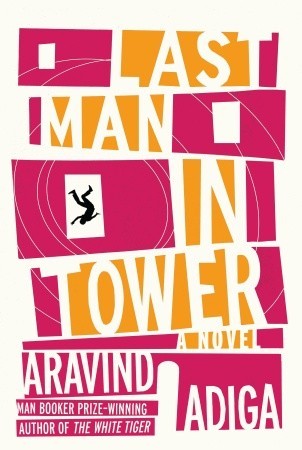
Last Man in Tower

“It’s your society. Keep it clean.”

So reads a sign in the elevator of Tower A of the fictional Vishram Society apartment complex in Mumbai — the “rainwater-stained, fungus-licked grey building” that serves as the focal point of Booker Prize winner Aravind Adiga’s new novel. Decades of monsoons and erosion have left the building standing “in reasonable chance of complete collapse.” But, Adiga writes, “no one, either in Vishram Society or in the neighborhood at large, really believes that it will fall. Vishram is a building like the people living in it, middle class to its core.”

I reviewed Last Man in Tower by Aravind Adiga for The Second Pass — the full review is online here.

Please Look After Mom Essay Contest

After I reviewed Please Look After Mom this past spring, I was contacted by the Korean Cultural Service of New York to serve as a judge for an essay contest they’d decided to host based on readers’ responses to the book.

It was both an honor and a pleasure to read the contest entries and experience Kyung-sook Shin’s novel anew through some of her fans.

The Korean Cultural Service announced the winners a few weeks ago, and has now published a collection of selected essays.  You can download a PDF the collection — which includes all the winning essays and a short essay I was asked to write about judging the contest — here.

Guadalajara

Three pages into Quim Monzó’s new short story collection, the opening tale’s seven-year-old protagonist makes a startling discovery: everyone over the age of nine in his family of carpenters is missing the ring finger of his left hand, and it’s not by accident. Welcome to “Family Life,” which fits within the morbid boundaries of Guadalajara—a realm where fables are subverted, where rote tasks lead to existential confrontations, where absurdity masks philosophical heft, and where grim uncertainty and playful possibility coexist.  Armand is terrified, and perhaps the reader should be too: in Monzó’s hands, the possibilities are limitless—and entirely unpredictable.

Head over to Words Without Borders for my full review of Guadalajara, Quim Monzó’s delightfully subversive collection of short stories.

The Absent Sea

Where were you Mamá, when all those horrible things were taking place in your city?”  This question, put to Laura by her daughter Claudia, is what has drawn The Absent Sea’s protagonist back to the fictional town of Pampa Hundida at the start of novelist Carlos Franz’s exploration of the turbulent aftermath of Chile’s 1973 coup.

Pampa Hundida is a recurring setting for Franz’s work.  He places it in the northern part of the country, an oasis hidden in the Atacama desert; he has described it as “above all, a region of the spirit.”  In The Absent Sea’s opening pages the city is in the midst of La Diablada, Pampa Hundida’s annual religious festival.  Costumed pilgrims from the region—“a disparate bewildering, arbitrary crowd”—come “to beseech and to celebrate, to plead and to dance” in an age-old collective reckoning with evil.  After twenty years of self-imposed exile, Laura has returned for a reckoning of her own.  She’s come to reclaim the same judicial post she left two decades before, and to face up to where she was when all those “horrible things” were happening in Pampa Hundida.

My review of The Absent Sea by Carlos Franz is now up at Words Without Borders.

“It’s safe, but”

As I was waking up for work early yesterday morning, on the other side of the globe Japan was observing a moment of silence for the victims of its twin natural disasters.

When I arrived at the office that day a month before, 32 people had been killed from Japan’s earthquake and tsunami. By the time I left work that day, the estimated death toll was between 200 and 300– a nearly tenfold increase.

Just one week later, the number of people dead or missing from the disaster had risen to more than 20,000– almost twice the population of my hometown.

Now that number is closer to 25,000, and I’m no less stunned by the effects of the disaster.  In the past weeks, The Takeaway has heard from nuclear experts, relief workers, professors of Japanese culture, and even Yoko Ono, but there’s no getting around the basic incomprehensibility of the damage.

Yesterday as I was thinking about how the story has unfolded, I stumbled on this moving poem by Tadashi Nishimura:

“It’s safe, but” / they say over and over / that’s worrisome

Watching the story develop in the role of a journalist, my eyes have been trained on the facts (many of them numerical in this “level 7” disaster).

But poetry cuts past the numbers — the thousands dead or missing, and many more without electricity or water, a home or word from their families; the hundreds of millisieverts of radiation being emitted; the billions of dollars in economic losses — and pierces the heart of the catastrophe’s uncertainty.  It emerges from the rubble of destruction, confusion, and misinformation to describe the very things which evade measurement: loss, blame, guilt, fear, upheaval, meaninglessness.

Another thing about poetry is its eerie timelessness.  From an anthology compiled in 13th century Japan:

Like a driven wave,
Dashed by fierce winds on a rock,
So am I: alone
And crushed upon the shore,
Remembering what has been.