Crowd-Sourcing a People’s Poem for the Inauguration

When I was in Florida for the Miami Book Fair this past November, I got the chance to see The Takeaway’s Miami affiliate, WLRN, launch a cool crowd-sourced short story project on Twitter.  They recruited Junot Diaz to supply their story with an opening line, sent it out over Twitter, and then watched as listeners pieced together a narrative. It was a real, live, many-headed story — messy but compelling.

Inspired by WLRN’s success, last week, my WNYC colleagues and I decided to attempt a similar project– this time with poetry rather than prose.

The inauguration provided a theme.  The Takeaway invited poet Kwame Dawes to kick things off with a discussion of inaugural poetry last Wednesday.  In that interview, Dawes presented the first (original) line for what would become our crowd-sourced poem:  Say nation. In the wake of quarrels, say hope. We Tweeted out the line and asked listeners to follow up with subsequent lines of their own using the hashtag #prezpoem.

Almost immediately, the lines started pouring in.  By the end of the week, we’d recieved hundreds of Tweets.  On Friday, Dawes returned to the program to survey the lines– and to share the poem he’d assembled from them.  (He was joined by poet Elizabeth Alexander, who delivered the 2009 inaugural poem —  and who had some very smart things to say about poetry and politics.  Hear their whole interview here.)

But it didn’t stop there.  For me, the best part of the project was the grand finale, which aired this morning.  After picking out a couple dozen of the strongest Tweets, I asked their authors to send audio of themselves reading their line (plus a few stanzas before and after). Piecing together the lines with the help of The Takeaway’s resident audio wizard Jay Cowit, a gorgeous audio poetry mash-up emerged.

This is what audio of the final poem sounded like.  And this is what the final text of the poem looked like:

A People’s Poem for the Inauguration

Say “nation.” In the wake of quarrels, say “hope.”
Be not divisive nor divided.

Say “neighbor.” Say, “What can I do?”
Doors open. Together walk through.
In the hurly-burly of the day’s governing
remember the freedom of peace.

At the dawn of uncertain tomorrows, say “change.”
While darkness floods our spirit, say “light” and shatter
all our scattering shadows.

Dream, “neighbor.” In the face of fear, sing, “mercy.”
Hear unity from voices that speak.

Say that freedom, both the blessing and right,
remain the provenance of open minds.
Acknowledge the dreams that birthed a great nation — say “freedom.”
Speak it into action and watch our dreams reshape the future.

And heart in hand, for the sake of the young,
of the old,
of all those who
wade thru injustice’s tide, say “freedom.”

Say and shout and sing! Progress is a storm and our voices the thunder.

Say “peace” for the hearts of a nation’s people, in times of grief.
Say one, say all. To abandon hope is to further the fall
Say “take my hand” to the downtrodden, the lost.
Sing harmonies that blend in a spectrum of love.

In the dark of failures, say “try”; encourage, persist to light.
Say friend, my hand for your strength, your eyes for my light as we forward together.
Say hope is ours.
Wash away morose pessimism and the failings of the nascent.
Remember our virtue; remember our lofty intent.
In the wake of the struggle, speak, so that together we all may speak courage.

Say “hope,” eyes turned not to the gauzy sky
nor to the brassy gates of power
but to the frost-bitten grass beneath our feet.

I need to hear, again, those antiquated words
in this new light.

Hot Reads: She Matters, Searching for Zion, The Great Agnostic, Rage is Back, Truth in Advertising

Picture 2The book that really got to me from this week’s Daily Beast/Newsweek Hot Reads was She Matters.  It’s a memoir of an unusual variety.  It’s also a real heart-breaker. Every woman has befriended (or been) a Susanna somewhere along the way.
The Great Agnostic

Reading The Great Agnostic: Robert Ingersoll and American Freethought by Susan Jacoby, I came across this elegant bit of rhetoric from Ingersoll describing his vision for the future:

The popes and priests and kings are gone– the altar and the thrones have mingled with the dust– the aristocracy of land and cloud have perished from the earth and air, and all the gods are dead.  A new religions sheds its glory on mankind.  It is the gospel of this world, the religion of the body, of the heart and brain, the evangel of health and joy.  I see a world at peace, where labor reaps its true reward, a world without prisons, without workhouses, without asylums for the insane, a world where the poor girl, trying to win bread with the needle, the needle that has been called “the asp for the breas of the poor,” is not driven to the desperate choice of crime or death, of suicide or shame.  I see a world without the beggar’s outstretched palm, the miser’s stony stare, the piteous wail of want, the pallid face of crime, the livid lips of lies, the cruel eyes of scorn.  I see a race without disease of flesh or brain, shapely and fair, the married harmony of form and use, and as I look life lengthens, fear dies, joy deepens, love intensifies.  The world is free.  This shall be.

As they say in Sanskrit: “tathastu.”

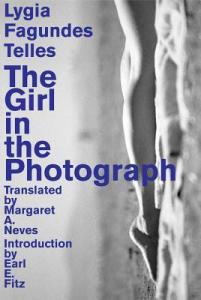
The Girl in the Photograph

A delicious read.  14433706

Despite its title, Lygia Fagundes Telles’s The Girl in The Photograph is really about three young women. They are Lia, Ana Clara, and Lorena—college girls who live in a Catholic boarding house somewhere in Brazil. The trio is bound by an intense friendship. Although Lia, Ana Clara, and Lorena can’t help thinking uncharitable things about one another from time to time, when they’re together, their connection is electric. They borrow each other’s handkerchiefs, cars, and money. They share jokes, verbal tics (“money,” is always “yenom”—Lorena thinks saying it backwards brings luck), clothes, and intimacies. They even tuck in each other’s shirttails.

Head over to Words Without Borders for the full review.

Love and Death in Miami

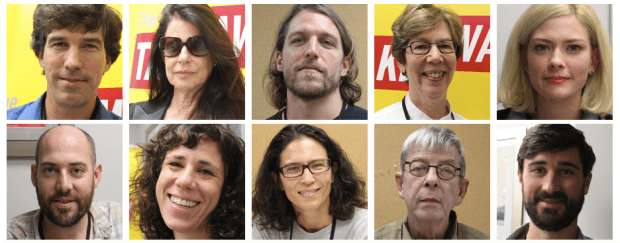
Picture 2The big think author panels The Takeaway did at the Miami Book Fair on death and love finally aired on Thursday and Friday and are now all online. At http://www.thetakeaway.org/loveanddeath/ there’s a neat little interactive with short bios with mini audio clips for everyone.

From top left to right: Benjamin Busch (Dust to Dust), Carol Blue (the afterward to Mortality), Deni Bechard (Cures for Hunger), Judy Goldman (Losing My Sister) and Susannah Cahalan (Brain on Fire) talked about death.

In the bottom row, left to right: Chris Beha (What Happened to Sophie Wilder), Jami Attenberg (The Middlesteins), Nina Revoyr (Wingshooter), Robert Goolrick (Heading Out to Wonderful) and Scott Hutchins (A Working Theory of Love) came together for a conversation about love.

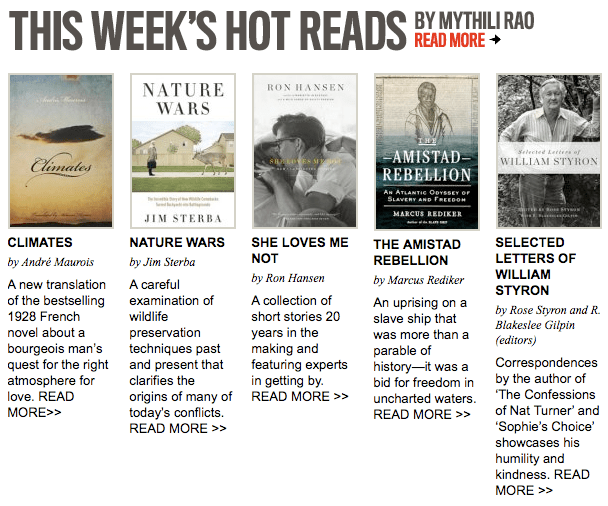
Hot Reads: Climates, Nature Wars, She Loves Me Not, The Amistad Rebellion, Selected Letters of William Styron

This week I found a “manic pixie dream girl” in a 1928 French novel, tried to get in the head of Walter Berglund, and learned that William Styron called Dorothy Parker “my little crumpet.” Full reviews here.

Miami Book Fair International

Three days, fourteen authors.  That’s the rough itinerary for this weekend in Miami, where it’s 70 degrees and sunny and I have a suitcase full of books.  Takeaway host John Hockenberry and I flew into town for the Miami Book Fair International yesterday; we leave tomorrow. Yesterday, John spoke with New Yorker staff writer Adam Gopnik about what makes a family dinner table come alive; tomorrow, he’ll be talking to graphic novelist Derf Backderf on what it was like to be high school classmates with serial killer Jeffrey Dahmer.  All of those conversations — as well as two “big-think” author discussions on love and death — will be airing the week after next (about the time when it dawns on me once again just how cold New York winters really are).

Hot Reads: Several Ways to Die in Mexico City, Try the Morgue, the Middlesteins, A Free Man, The Greatcoat

Let me tell you about this week’s Daily Beast/Newsweek Hot ReadsThe Greatcoat was a fine way to spend a rainy afternoon. Several Ways to Die in Mexico City stumbled into my lap and changed the way I think about what I eat and drink. The Middlesteins is the book I happily read in one sitting.  Try the Morgue is the book I haven’t been able to stop talking about. A Free Man is the book I wish I’d written that I think everyone should read.