Remembering Photojournalists Killed in Misrata

I never met Chris Hondros.   But he took my photo once, on a very cold day two years ago when  I was part of a media gaggle outside Bernie Madoff’s Upper East Side apartment, waiting for the Ponzi-schemer to return home from a court appearance.

When I first saw that photo, the novelty of it tickled me. The camera had been turned on me — a media peon with a very minor role in the Madoff drama. It was slightly flattering and slightly funny, in part because it documented me holding my favorite travel mug, a souvenir from the Greenberry’s coffee franchise in Charlottesville. I never noticed Hondros specifically, and I’ll never know if he had been assigned to document the media scrum that day, or if this particular shot was just one he took while waiting for Madoff, bored like the rest of us.

Since hearing news of the deaths of Hondros and British photojournalist Tim Hetherington in Misrata yesterday that photo has taken on a completely new meaning — and I haven’t been able to stop thinking about it.   In light of Hondros’ death, the photo is a reminder to me that the world — and I don’t just mean the world of journalism, or its New York microcosm — really is quite small and interconnected.  And it reminds me that journalists everywhere, every day, can be made to pay a steep price for doing their jobs.

When Madoff’s car arrived that day, the crowd was caught off-guard.  CNN got the shot it wanted — mostly because of the good instincts of the photojournalist I was field producing for, who at the last minute stationed me as a lookout so I could signal which way the car was coming. In the chaos of the stakeout, I left my prized Greenberry’s mug on Madoff’s stoop, and the photo used to remind me of the mug I lost that day. But of course now the loss it conveys is much heavier.

(For more on Hondros and Hetherington, check out The Takeaway’s audio remembrance, either of these — one and two — New York Times slide-shows, or this video diary).
“It’s safe, but”

As I was waking up for work early yesterday morning, on the other side of the globe Japan was observing a moment of silence for the victims of its twin natural disasters.

When I arrived at the office that day a month before, 32 people had been killed from Japan’s earthquake and tsunami. By the time I left work that day, the estimated death toll was between 200 and 300– a nearly tenfold increase.

Just one week later, the number of people dead or missing from the disaster had risen to more than 20,000– almost twice the population of my hometown.

Now that number is closer to 25,000, and I’m no less stunned by the effects of the disaster.  In the past weeks, The Takeaway has heard from nuclear experts, relief workers, professors of Japanese culture, and even Yoko Ono, but there’s no getting around the basic incomprehensibility of the damage.

Yesterday as I was thinking about how the story has unfolded, I stumbled on this moving poem by Tadashi Nishimura:

“It’s safe, but” / they say over and over / that’s worrisome

Watching the story develop in the role of a journalist, my eyes have been trained on the facts (many of them numerical in this “level 7” disaster).

But poetry cuts past the numbers — the thousands dead or missing, and many more without electricity or water, a home or word from their families; the hundreds of millisieverts of radiation being emitted; the billions of dollars in economic losses — and pierces the heart of the catastrophe’s uncertainty.  It emerges from the rubble of destruction, confusion, and misinformation to describe the very things which evade measurement: loss, blame, guilt, fear, upheaval, meaninglessness.

Another thing about poetry is its eerie timelessness.  From an anthology compiled in 13th century Japan:

Like a driven wave,
Dashed by fierce winds on a rock,
So am I: alone
And crushed upon the shore,
Remembering what has been.

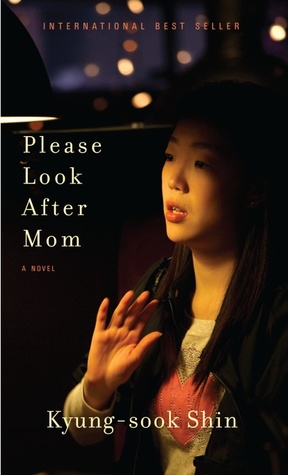
Please Look After Mom

Outside the market you saw two people cutting apart a fish that was as big as a sedan. You asked if it was tuna, since it was so large, but the vendor said it was an ocean sunfish.  You were reminded of a character in a book whose title you couldn’t remember. She was from a seaside town, and she would go to the huge aquarium in the city every time she had a problem, to talk to the ocean sunfish swimming inside. She would complain that her mother took all her life savings and went off with a younger man to a different city, but then, at the end, would say, But I miss my mom; you’re the only one I can tell this to, sunfish! You wondered if that was the same fish.

Kyung-sook Shin

Please Look After Mom by Kyung-sook Shin sold close to a million and a half copies in South Korea, and is set to be published in 18 countries around the world.  It’s the first of Shin’s books to be translated into English.  My full review for Sunday’s New York Times Book Review is here.