To get a little perspective on Greg Smith’s “I quit” letter to Goldman Sachs while brainstorming at work today, I decided to call up Evan Harris. Back in 1995 she was pretty much the poster-child for quitting. She quit her job, boyfriend, and city, and started a zine called Quitters Quarterly. She was featured in an episode of This American Life, and she wrote a book called The Quit. Seventeen years later? She’s married with kids, back in her hometown. Here’s what she told me.
Recently on The Takeaway
Here are just some of the segments I’ve recently worked on for The Takeaway:
A New Legal Challenge to Affirmative Action “Since George Washington, universities have been thought of as places where the American melting-pot idea could be realized, in part,” Columbia University President Lee Bollinger told The Takeaway. Nearly a decade ago, Bollinger was part of two landmark Supreme Court Cases on affirmative action, Gratz vs. Bollinger and Grutter vs. Bollinger. He weighed in on how the new challenge to affirmative action posed by the Fisher vs. Texas case could change the face of the student body of universities of the future.
NYPD Surveillance Program Monitored Muslim Students at 13 Colleges A recently leaked New York Police Department report provides a startling picture of just how far the NYPD’s intelligence division went in a surveillance program targeting monitoring Muslims students at 13 colleges in the northeast. CUNY student Jawad Rasul told The Takeaway he was shocked to find out he’d given an undercover agent a ride to a student whitewater rafting trip. “These things come out which really are kind of a slap in the face to the people who are trying to assimilate into the country and lose our foreign identity to become American,” he said. (More on this story from the WNYC Newsroom.)
Electoral Demographics and the History of Presidential Primaries Ken C. Davis, author of Don’t Much About History joined the show to help fact-check some claims made by writer Timothy Egan in a recent New York Times op-ed. “There is no other way to put this without resorting to demographic bluntness: the small fraction of Americans who are trying to pick the Republican nominee are old, white, uniformly Christian and unrepresentative of the nation at large,” Egan claimed. Davis explained why that comparison is somewhat — but not entirely — accurate.
60 Lives Connected in the Largest Chain of Kidney Transplants Candice and Michael Ryan, a husband and wife kidney recipient and donor shared their moving experience as part of the largest-ever chain of kidney transplants. “It’s life-changing,” an emotional Candice Ryan told The Takeaway. Check out The New York Times’ incredible multimedia coverage of this story here.
Chinese Vice-President Xi Jingping Visits The US The Atlantic Monthly’s James Fallows explained how the Communist Party’s role in business has evolved in China. Kirk Leeds, CEO of the Iowa Soybean Association also joined the show to discuss how Vice-President Xi’s visit to the state would reinforce a multi-billion dollar trade partnership.
California’s Ban on Gay Marriage Struck Down “You cannot give a right to marry and then take it away solely on the ground that the individuals that you are taking it away from are a despised or disfavored group,” explained NYU law professor Kenji Yoshino. While working on this segment, I also recorded a short audio interview with John Lewis and Stuart Gaffney, a phenomenal couple. Read more about them here or listen to a longer interview with them from 2010 here.
Tebow Bill May Allow Home-Schoolers to Play on High School Teams Homeschooler Patrick Foss is a talented soccer player heading to University of Virginia in the fall to play college soccer. He told The Takeaway he wished he’d been able to play soccer on the local high school team. “My parents are taxpayers just like next door neighbors, just like the person two doors down who is the starting point-guard at our high school,” he said.
Inscrutable India
 As promised, more reflections on this year’s eventful Jaipur Literature Festival:
Up until the day before JLF began, there were rumors that Rushdie — who reportedly had been dropped from the official program due to “a very real threat of violence at the venue” — planned to make a surprise appearance. Then, on the first day of the festival, Rushdie issued a statement: “I have now been informed by intelligence sources in Maharashtra and Rajasthan that paid assassins from the Mumbai underworld may be on their way to Jaipur to ‘eliminate’ me,” he wrote. “While I have some doubts about the accuracy of this intelligence, it would be irresponsible of me to come to the Festival in such circumstances.”
To voice their disapproval of the circumstances of Rushdie’s absence, four writers, Hari Kunzru, Amitava Kumar, Jeet Thayil, and Ruchir Joshi, read from The Satanic Verses — a book that has been banned in India — in their sessions later that day. They were subsequently advised to leave the festival, and the local police opened an investigation into their activities. There were still four days of panels left.
What was left to discuss? Anything but Rushdie. On guidance from the event organizers, everyone from Shashi Tharoor to David Remnick was talking around the debacle, momentarily alluding to it — knowingly, coyly — but never quite addressing it or the full array of issues it raised on India’s thorny history with censorship, religious fundamentalism, democratic and bureaucratic processes (and Salman Rushdie himself). It was a strange predicament for a symposium of ideas to find itself in. “So many awkward Rushdie references,” I scribbled in my notebook after day three. That’s all they were, though — fleeting references, fleetingly observed.
The show must go on! the organizers seemed to be saying. And, with 200-some authors still lined up to speak, it did. Lively on-stage conversations abounded. High-profile ones did too. Amy Chua debated economic policy. Teju Cole riffed on why it wasn’t necessarily only African writers who inspired him to become a writer. Oprah advocated for women’s rights. Fatima Bhutto discussed the future of Pakistan. Akash Kapur meditated on India’s changing rural landscape. Yet the topic of Rushdie continued to remain largely untouched, and a nagging question lingered in my mind: What kind of real intellectual discussion could go on in a setting that had proved itself so hospitable to self-censorship? When you gathered a hundred-thousand writers and book-lovers and then stripped away the opportunity for a truly free public exchange of ideas, what was left?
Head over to The Millions to read my full essay, “Inscrutable India: Jaipur Literature Festival’s Baffling Bazaar of Culture and Commotion.”
photo by me: creepy art on display at Diggi Palace during JLF
Mr. g
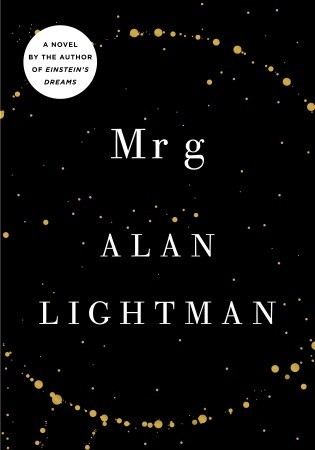 I reviewed Mr. g by Alan Lightman for Newsweek/The Daily Beast:
For a book with no hidden plot twists—the reader knows that Mr. g’s experiments in cosmos-building in his pet universe, Aalam-104729, are bound to lead to the birth of mankind—Mr. g is strangely suspenseful. It turns out that the act of creation is profoundly transformative, even for a formless, timeless, all-powerful primogenitor. The plot moves forward as the universe gradually unfolds, but the real story here is about Mr. g’s inner awakening.
Jaipur Lit Festival
 I’m at the Jaipur Literature Festival in India this week. It’s a riot. Between the panels, the parties and after-parties, the crowds, the chaos and the competing theories about just what really went down with Salman Rushdie (and what happened to the writers who read The Satanic Verses in protest), the last several days have been action-packed. Not much time to write more just yet — still running around and taking it all in.
Books of 2011: A Round-Up
Last year, I found it extremely satisfying to put together a list of the ten best new books of 2010 I’d read. So I decided to do it all over again. Presenting the ten best new books of 2011 I’ve read:
The Beautiful and The Damned: A Portrait of the New India (Siddhartha Deb) A few months ago, I went to see Deb and Aatish Taseer discuss the future of India and Pakistan at a Granta magazine event at 192 Books. It was the most heated (and completely riveting) debate I’ve ever heard on the subject; Taseer and Deb are both very passionate about the subcontinent but think about it very differently. This book illustrates Deb’s perspective through a compilation of profiles — of Indian call center employees, middle-class engineers, shady magnates, struggling waitresses, Marxist farmers, idealistic inventors, and others. Deb doesn’t always find clear answers to the very good questions he asks about who the real winners and losers are in India’s recent economic surge. Nevertheless, his investigations provide a rich picture of what life in today’s global India is like for the filthy rich and the hopelessly destitute, as well as those who fall somewhere in between.
Noon (Aatish Taseer) Although I followed news of the death of Salmaan Tasseer (governor of Pakistan’s Punjab province) rather closely last year, I didn’t know who Aatish Taseer was til I came across an editorial he wrote in the Wall Street Journal entitled “Why My Father Hated India.” After seeing Taseer at 192 Books, I picked up Noon mostly because I was curious to find out more about his life and perspective. I wasn’t disappointed. Like its author, the novel’s main character (Rehan Tabassam) is the son of a Pakistani powerbroker and a cultured Indian mother who have a brief affair; he has a privileged upbringing but no real relationship with his father til early adulthood, when he travels to Pakistan seeking out his extended family. The novel’s biggest strength — and weakness — is that it sticks closely to what the narrator perceives and experiences. This means the big political and cultural questions the story touches on are only ever examined fleetingly, as Rehan struggles to sort out his own place as a man, a son, an Indian and a Pakistani. Though the book seems to fall short of its own ambitions, it still offers a valuable glimpse into two dynamic countries in transition.
Guadalajara (Quim Monzó) Entrancing, fun, and unique. Months after reading this book, I find myself still thinking about the swiftly-drawn characters of these stories and their strange predicaments.
Please Look After Mom (Kyung-sook Shin) I fell for this book immediately when I read it. I fell for this book a second time when I read the responses it evoked from other readers as a judge for the Korean Cultural Service’s essay contest earlier this year. I fell for this book for a third time after discussing it with my mom when her book club read it last month.
Lee Krasner: A Biography (Gail Levin) The Brooklyn-born daughter of Jewish immigrants from Russia, by the time Lena Krasner was thirteen, she knew she wanted to be a painter. An early abstract impressionist, Krasner was already peers with artists like Arshile Gorky, Willem de Kooning, and Piet Mondrian, when she met and married Jackson Pollock. As Pollock’s career took off, Krasner directed her considerable energy and talents towards promoting his work and trying to keep his destructive alcoholism in check—while dealing with the frustration of suddenly being known simply as “Mrs. Jackson Pollack” (later critics would acknowledge that the marriage was “at once the greatest single advantage and the greatest handicap to her career”). No portrait of Pollock—or the abstract expressionist movement at large—is complete without a picture of Krasner’s life, but her life story is also very much a story about feminism’s early battles, a struggle best summed up by a few lines of French poet Arthur Rimbaud painted on her wall: “To whom shall I hire myself out? What beast must one adore? … What lie must I maintain?”
The Destiny of the Republic: A Tale of Medicine, Madness, and the Murder of a President (Candice Millard) Candice Millard brings a relatively obscure chapter of history to life in this nonfictional account of the assassination of President James Garfield. History textbooks don’t have much to say about President Garfield because his time in office was so short, but there’s a lot to admire in his life story, from his stint as his school’s janitor to his abolitionist views and composure through terrible pain on his deathbed. A bit of trivia in the book that especially captured my imagination has to do with Chester Arthur, the man waiting in the wings. A product of the spoils system, Arthur’s political ascendancy was entirely the result of ass-kissing, and popular sentiment widely regarded him as unworthy of the presidency. Arthur knew this about himself, and as the much-loved President Garfield lay dying in the White House, his vice-president fell into a deep despair. Then, at his lowest moment, Arthur got a letter from an unmarried 32-year-old invalid named Julia Sand. “Great emergencies awaken generous traits which have lain dormant half a life,” she wrote. “If there is a spark of true nobility in you, now is the occasion to let it shine. Faith in your better nature forces me to write to you — but not to beg you to resign. Do what is more difficult & more brave. Reform!” Arthur was moved by this vote of confidence, and took her advice to heart. Millard cites Alexancer McClure for this summary of Arthur’s time in office: “No man ever entered the Presidency so profoundly and widely distrusted as Chester Alan Arthur, and no one ever retired … more generally respected, alike by political friend and foe.”
The Valley of the Masks (Tarun J. Tejpal) In this haunting, mesmerizing book, Tarun Tejpal creates an entire mini-civilization hidden away somewhere on the Indian subcontinent; the novel is narrated by one of its former inhabitants recounting his life story. I was particularly taken by the way the book enters into a dialogue with The Mahabharata — the protagonist, tellingly, is given the name “Karna” by his mother — as it considers twisting questions of ethics, morality and how to live. In some ways, the book’s message against the evils of totalitarianism and the fundamentalist thinking (“quest for perfection”) is a simple, familiar one. But the combination of discipline and credulity of the book’s narrator, as well as the poetic richness of the elaborate world he inhabits take this book to another plane.
The Sly Company of People Who Care (Rahul Bhattacharya) A rambling, vibrant account of the year a young cricket journalist from Mumbai spends looking for adventure in Guyana. A little unfocused but full of life and thick with sensory description. Bhattacharya dives in deep.
Nothing to Envy: Ordinary Lives in North Korea (Barbara Demick) This book wasn’t published in 2011, but I’m making an exception. I happened to read this six months before Kim Jong-il’s death; nothing I’ve seen or heard about North Korea from any other source (including “Kim Jong-il’s guy in New Jersey”) has been more incredibly eye-opening. Barbara Demick spent years interviewing North Korean refugees — focusing on those who left one particular town, Chongjin — to piece together a detailed picture of life under Kim Il-sung/Kim Jong-Il. Demick’s six main characters each left the country in very different ways for very different reasons. The world they find beyond North Korea’s borders startles, amazes and sometimes confounds them. Demick’s description of a young North Korean girl eating a banana for the first time (in The New Yorker and on The Takeaway) is what first drew my interest to this book, and it proved to be a good measure of what the experience of reading the entire book is like. Nothing to Envy is full of one astonishing — and very real — moment after another. “Horrifying” sums up much of life in North Korea, but the stories in this book demonstrate the tremendous resilience, bravery, romance, and fortitude of its people too.
El Narco: Inside Mexico’s Criminal Insurgency (Ioan Grillo) Take even a cursory look at Mexico’s drug war and you’ll quickly find support for the old adage, “Truth is stranger than fiction.” Grillo has spent more than a decade in Mexico, and this book piles on one wild – historically verifiable – tale after another. Though Grillo’s anecdotal style comes off as clumsy once in a while, the conversational tone he takes in his extensive, substantive journalism is refreshing overall.
Finally, here are five books of 2011 I’d like to read but haven’t yet gotten around to: The Tiger’s Wife (Téa Obreht), Bossypants (Tina Fey), The Folded Earth (Anuradha Roy), Room For Improvement: Notes on a Dozen Lifelong Sports (John Casey), The Marriage Plot (Jeffrey Eugenides).
Queen of America
 My review of Queen of America by Luis Alberto Urrea appears in The New York Times Book Review today:
Luis Alberto Urrea spent nearly 20 years researching his family history for his enchanting 2005 novel “The Hummingbird’s Daughter.” Out of old letters, historical documents and oral histories emerged the fantastical story of the author’s great-aunt Teresa, a Mexican saint and revolutionary who was the illegitimate daughter of Tomás Urrea, a wealthy landowner, and a Yaqui Indian woman known simply as Cayetana, or the Hummingbird. By the final wrenching pages of that novel, Teresita, as she’s called, has by presidential decree been declared the Most Dangerous Girl in Mexico. Banished from the country, she and her father are put on a train headed north to the United States.
The Artist of Disappearance
 I reviewed The Artist of Disappearance by Anita Desai for Newsweek/The Daily Beast:
Regret, disappointment, and despair color the lives of the characters of The Artist of Disappearance, author Anita Desai’s latest book, which is made up of three novellas. In these stories, Desai casts her gaze backward to conjure a fading era. Though “details of time and place are left deliberately vague” (as Desai notes in a recent interview), the India of this volume is clearly not the “new India” of booming economic growth and rapidly shifting fortunes; it is an older India of fading dynasties and postcolonial habits.
The Best Blurb I Never Had
Making the rounds this week is a wonderful Los Angeles Review of Books essay about the time a young writer named Joan Williams asked William Faulkner for a blurb for her book. Glen David Gold’s line-read of Faulkner’s grizzly reply touches on many things that interest me, like the life of Faulkner (especially, his UVa writer-in-residence years), the highlights and low-lights of literary friendships and favors, the fine art of blurb-making and ellipses insertion (a craft I learned many years ago as an intern in Granta’s offices), the horror of transactional relationships, the lost art of letter-writing, and (spoiler alert!) what happens when an older, famous writer strikes up a relationship with a young, unestablished one.
Some years ago, a prize-winning writer who you probably have heard of emailed me. I was in the middle of an onerous task at a corporate job I wasn’t suited for when the message flashed across my screen. “Please forgive the intrusion,” it began. I almost fell out of my chair. This writer — who had been assigned reading for me in college a few years before — called my writing “smart” and “interesting.” He wanted to know what else I was working on.
What followed was not my ticket to fame or the start of a steamy affair (either which would have made a much better story than the one I’m telling now). To my regret, it was not the start of a lasting literary friendship, either. We exchanged emails — some earnest, some chatty (his were filled with profanities) — about life and writing, and the writing life, while I got started on a freelance assignment he’d set up for me. We planned to meet for coffee but he was traveling extensively, and anyway, I didn’t want to meet until I had made some headway on the freelance assignment — or had other “smart” and “interesting” work to show him.
We never did get coffee. I happened to be visiting my parents in Virginia during the short window he was in New York, but the real problem was that I wasn’t sure if I was exactly who the famous writer hoped I was. I had just finished graduate school, where I had read things, and developed ideas (a “promiscuous mind” full of them, as the only graduate school professor to give me less than an A put it) but I wasn’t sure, exactly, what it was I was supposed to be writing about — or doing, for that matter — next. For lack of any better plan, I threw myself into my full-time job and the busy social life of a single girl living in downtown Manhattan. I hoped things would make more sense eventually. When they did, maybe I would write about it.
In the meantime, my pen pal’s emails were getting ever-so-slightly more familiar and affectionate — nothing untoward, but there was a shift in tone. I studied his words with even more scrutiny than I’d given them in college. I read parts of his messages to my older brother on the phone. “Sly dog,” my brother said. I started flinching every time I saw the famous writer’s byline. Writers: They’re just like us (this was a concept I mastered when I was an intern at Us Weekly). They Google strangers. They don’t know what they’re looking for. They don’t know what they mean. Our correspondence tapered off.
A few more years have gone by and to my surprise and relief, things do make more sense, as I’d hoped they would. I’m happy with my new, different job, my boyfriend and my outer-borough life. And the writing? It’s coming along — slowly. I’m finding my footing. Maybe I should be in more of a hurry, but I’m not. “How much of a balancing act to determine your real value to another person,” Gold writes. Let me add: Or indeed, to yourself.
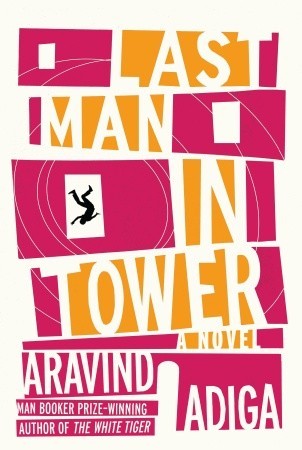
Last Man in Tower
“It’s your society. Keep it clean.”
So reads a sign in the elevator of Tower A of the fictional Vishram Society apartment complex in Mumbai — the “rainwater-stained, fungus-licked grey building” that serves as the focal point of Booker Prize winner Aravind Adiga’s new novel. Decades of monsoons and erosion have left the building standing “in reasonable chance of complete collapse.” But, Adiga writes, “no one, either in Vishram Society or in the neighborhood at large, really believes that it will fall. Vishram is a building like the people living in it, middle class to its core.”
I reviewed Last Man in Tower by Aravind Adiga for The Second Pass — the full review is online here.
 Mythili G. Rao