Hot Reads: The Pomegranate Lady and Her Son, Nefertiti in the Flak Tower, You Are Not Forgotten

pomHot Reads! I took a little break from reviewing in September/October to get married.  It was grand.  This is the first post-wedding set of reviews.

Goli Taraghi’s The Pomegranate Lady and Her Sons was the standout of this set:

Born in Tehran in 1939, Goli Taraghi was a teenager during Iran’s 1953 coup and a grown woman during the 1979 revolution. Both upheavals feature prominently in her writing, but the stories collected in The Pomegranate Lady and Her Sons are hardly polemical. Political tumult instead merely provides the backdrop of the transformations of her characters, young and old. The adolescent girls of “Flowers of Shiraz” can hardly comprehend the change underway in their country: In the run-up to Mossadeq’s ouster, they ride their bikes through the city, meeting for ice cream, flirting with boys, and racing through the hills, despite the protests on the streets. Mitra, Gol-Maryam and Parivash wear their political allegiances as lightly as their crushes. That’s not to say Taraghi isn’t interested in history’s course; she plays a long game in many of her stories, following the fates of characters across decades and continents. In “The Gentleman Thief,” a math teacher-turned-smalltime-burglar sneaks into the narrator’s house. “Excuse me,” he says. “With your permission I will take this bowl and clock and I will leave.” (Before escaping out the window, he asks for a glass of water, too.) Only many years later does his full story emerge, when the narrator returns from Paris to visit her ailing uncle. Much to her surprise, the former thief is now her uncle’s caretaker and loyal companion. A similarly complicated fate unfolds in “Amina’s Great Journey,” the tale of a big-eyed Bangladeshi maid named Amina who spends her days daydreaming of movie stars. The story charts Amina’s slow transformation from a gullible young girl who is complicit in her greedy husband’s abuse to a confident woman intent on educating her children. Taraghi carves out space for mysterious forces—powerful coincidences, supernatural spirits and uncontrollable compulsions—in her stories. But at the heart of these tales are just ordinary people, caught in strange times.

For the rest of the week’s reviews, head over to The Daily Beast.

Happiness, Like Water

I reviewed Chinelo Okparanta’s Happiness, Like Water for The Daily Beast:

Scheming mothers and selfish husbands, fathers, and brothers domineer over the sensitive women of Happiness, Like Water, Nigerian-born Chinelo Okparanta’s debut short-story collection. A graduate of the Iowa Writer’s Workshop, Okparanta was named one of Granta’s six New Voices in 2012. It’s a fitting honor: the unsparing stories of Happiness, Like Water show Okparanta to be a champion of young, frequently misunderstood female protagonists whose voices are too often stifled. In many of these tales, Okparanta’s women struggle to control their fate in the face of oppressive circumstances.‬

The full review is here.

happiness

Hot Reads: Lost Girls, Memories of a Marriage, The Madonna on the Moon, The Measures Between Us

Picture 1Summer: such a blur.  Here’s the most recent set of Hot Reads!  If you read just one of these books, let it be Robert Kolker’s Lost Girls.  It was hard to do it justice in less than 300 words.

A Fort of Nine Towers

towersI reviewed A Fort of Nine Towers by Qais Akbar Omar in today’s New York Times Book Review.  A snippet:

The collective memory of prewar life repeatedly saves Omar and his family. The bloodthirsty horticulturist drops his threats when he realizes he is menacing the father and son of his beloved boxing instructor. The leader of the tunnel diggers is none other than their old gardener’s assistant, a hardworking teenager and Omar’s partner in kite-fighting; upon finding his old employer’s son and grandson in captivity he orders their immediate release. Omar’s retelling startlingly transforms each horror into a reminder of what lies beneath the rubble: an openhearted, hospitable community of generous, gregarious people, “one minute laughing and the next minute shouting” and always fiercely loyal to their kind.

The Critic’s Global Voice

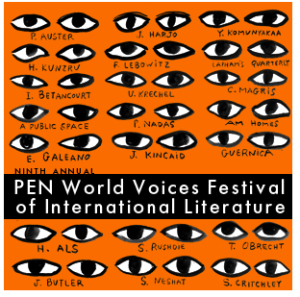
Screen Shot 2013-05-03 at 8.32.12 PMWith more than 100 world-class writers in dozens events spanning a week, this year’s PEN World Voices Festival line-up is pretty daunting.  I did manage to carve out time to make it out for a few things– and I blogged about an event earlier this week for Words Without Borders.  The topic was “The Critic’s Global Voice,” and the panel featured Jean-Euphèle Milcé, Ursula Krechel, and Mikhail Shishkin (with Bookforum editor Albert Mobilio moderating):

Reports of the death of American literary culture have been, well, at least a little exaggerated.  There’s no other way to explain the steady stream of lively essays bemoaning the health of book reviews, book critics, and literature itself. “Like hazing, reviewing is inflicted by the old and popular on the young and weak,” Elizabeth Gumport wrote, dismissing the genre in n+1. Literary culture is in the midst of a “long slide, reflecting not just a hard market but the manners of a bygone world,” as Michael Wolff recently put it in a churlish column predicting the demise of the New York Times Book Review.  At any rate, “most contemporary literary fiction is terrible,” J. Robert Lennon griped in Salon.

But what of the rest of the world?  Are we to believe that such assessments hold true for the public dialogue about books—and the role of “professional” readers—in other languages, other markets, other cultures?  Bookforum editor Albert Mobilio put the question of the role of criticism to writers from Russia (Mikhail Shishkin), Haiti (Jean-Euphèle Milcé), and Germany (Ursula Krechel) in a Wednesday night PEN festival discussion of “The Critic’s Global Voice.”

Head over to Words Without Borders for the rest of my dispatch, and for coverage of other PEN events (there’s a nice dispatch on the “Speaking in Languages on the Edge,” event, and interview with Susan Bernofsky, host of “How to Be a Translator” — and more coverage to come).

Hot Reads: Snapper, The Humanity Project, Red Spectres, My Animals and Other Family, The Other Side of the Tiber

Screen Shot 2013-04-22 at 9.39.00 PMFrom a lovestruck bird-chasing ecologist to the forgotten Gothic literature of 20th cent Russia: This week’s reviews are up.  Read more at Newsweek / The Daily Beast.

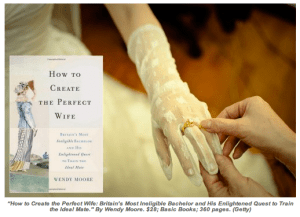
How to Create the Perfect Wife

Screen Shot 2013-04-22 at 11.36.59 PM

Thomas Day was wealthy and educated and ran in influential circles. But there was one problem. The 18th-century British philosopher’s lack of interest in polite manners and fashion—and, more important, personal hygiene—made it difficult for him to attract a suitable mate.

Day liked to quote a line from a poem titled “Advice to the Ladies”: “Wit like wine intoxicates the brain/Too strong for feeble women to sustain.”

You can find my full review of Wendy Moore’s utterly creepy and completely factual biography of Day, How to Create the Perfect Wife over at The Daily Beast / Newsweek.    

Hot Reads: Kings of the Road, Equilateral, The Pink Hotel, My Bright Abyss

This week’s Hot Reads feature a pink hotel, a red planet, a bright abyss, and a giant burning triangle.   Also, men in very short shorts.  Splendid books all around.  Visit The Daily Beast for the full reviews.

Hot Reads: The New Mind of the South, Honor, Between Man and Beast, A Tale for the Time Being, On the Ropes

Picture 1This week’s Hot Reads feature Japanese tsunami flotsam, “the ‘two-ness’ of Southerners,” an honor killing in 1970s London, and gorillas.